1. In complex sentences of the type: It is necessary (it seems, it becomes) that he should come (that he come).
1. It’s necessary that no one should breathe a word about it to her. 2. It’s so strange that your colleagues should have disagreed with you. 3. It was recommended that all papers be filed and locked. 4. It puzzled me that such a young girl should so insistently occupy his thoughts. 5. It is absolutely obligatory that all children here should wear uniform. 6. Isn’t it doubtful that the journalists should have been given such an evasive answer? 7. It’s better that your child not be vaccinated just now: wait a little. 8. Isn’t it clear that every opinion should be taken into consideration? 9. It was very odd that we should have met in my aunt’s house. 10. I’m horrified that he should have been found guilty. 11. It was inevitable that Danny should, sooner or later, pass through the town. 12. After lunch it was proposed that they should all go to the lake. 13. It is advisable that she should have someone to look after her. 14. It seemed necessary that his friends be kept away from interfering with his work. 15. It was important that no sound should give warning of their approach. 16. It was agreed that he be the first to speak. 17. It’s only natural that a mother should not wish to be parted from her children. 18. It is essential that the substance be chemically pure. 19. It is desirable that this method should be recommended. 20. He refused to join the company — it was imperative that he should be alone.
Exercise 2. Use the infinitives in brackets in the correct form.
1. Isn’t it strange that they (to expect) an answer all those months? Why didn’t they drop the whole thing? 2. It was recommended that the out-dated system (to replace) with something more modern. 3. It was only right that this company’s products (to boycott). 4. I’m positively shocked that you (to fail) such an easy test! 5. Isn’t it advisable that everything (to put) in writing? 6. It is important that you (to pass) your entrance examinations successfully to be admitted to a higher school. 7. It is desirable that you (to do) sports regularly. 8. It is necessary that the pupils (not to miss) lessons. 9. It is necessary that you (to be) able to come with us. 10. It is important that he (to learn) everything he can. 11. And it is really important that I (to see) Miss Smith. 12. It’s necessary that she (to give) new instructions before she starts her work. 13. It’s quite intolerable that he (to write) all that nonsense in the paper. 14. It is obviously necessary that an investigation (to make). 15. It’s necessary that we (to help) him. 16. It’s strange that they (to help) him — usually he doesn’t accept support from anyone.
Exercise 3. Use the infinitives in brackets in the correct form.
1. He had spent the first part of the night lying rigid and telling himself how important it was that he (to sleep). 2. It’s wonderful that they (to give) you a present. 3. It was arranged that his wife (to join) him in six months. 4. It was all wrong that someone so young (to be) so ill. 5. It was inevitable that the conversation with Ned (to turn) upon crime. 6. It’s not fair that the girl (to send) to bed so early on a day like this. 7. She listened in silence to Mel’s explanation why it was essential that he (to remain) at the airport. 8. It had long been decided that I (to spend) a fourth year at Cambridge doing psychology. 9. It was advisable that she (to continue) the treatment. 10. It was demanded that I (to tell) them all that had passed at the conference. 11. He hated to upset her, but it was so important that she (to understand), that his motives (to perceived) by someone. 12. It was unnatural the way he (to keep) his feeling in check. 13. Arthur said: “It seems to me almost a pity that the church (to forbid) priests to marry.” 14. After their talk it was urgent that she (to see) her husband. 15. It was amazing that this coarse man (to be) so worried about a dog. 16. It was arranged that I (to pick) up Hudson at his flat after lunch. 17. It was suggested that we (to stay) where we were till it was light.
a) It’s necessary for you to put off that call. It’s necessary that you should put off that call.
b) It was recommended to forget the whole matter. It was recommended that the whole matter should be forgotten.
1. It was only right for them to have agreed. 2. It’s very unusual for them to have admitted a stranger into their company. 3. It’s strange for the case to have been solved so fast. 4. It is recommended to inform your tutor about your progress. 5. It’s better for you not to answer back! 6. It was highly unnatural for him to be late. 7. It was thought unusual but not too strange for a person of his status not to have gone to that conference. 8. It is requested to report all breaks in the procedure at once. 9. It’s unbelievable for ten-year-olds to have put up such a good show! 10. It was considered obligatory then for the girls to learn to dance. 11. It was thought unbelievable for the junior staff members to complain. 12. It’s doubtful they produced such good results. 13. Isn’t it amazing that he got so near to the truth without any assistance?
1. Вам необходимо уехать как можно скорее. 2. Желательно, чтобы вы приняли участие в выставке. 3. Странно, что никто до сих пор не додумался до такого простого решения. 4.
Совершенно необходимо, чтобы дети знали правила дорожного движения. 5. То, как Джейн вела себя при встрече с вами, совершенно необычно. На неё это непохоже. 6. Рекомендуется прочитать текст целиком, прежде чем браться за перевод. 7. Это счастливое совпадение, что мы оба решили поехать сюда именно сейчас. 8. Восхитительно, что она сама взялась за эту задачу, хотя её никто и не просил. 9. В конце было решено, что они устроят вечер с песнями и танцами. 10. В этом случае весьма существенно, чтобы он не сделал ошибки. 11. Вдруг ему показалось страшно важным, чтобы они не оставляли его одного. 12. Договорились, что мы встретимся у него на квартире в половине восьмого. 13. Было нелепо, что она так рассердилась из-за пролитого молока. 14. Была высказана просьба, чтобы мы взяли всех детей с собой. 15. Странно, что страх делает с человеком. 16. Было желательно, чтобы он, следуя семейной традиции, поступил в медицинский университет. 17. Ей бы лучше купить себе новое пальто. 18. Удивительно, что вы помните мое имя! 19. Странно, что бы он так хотел пойти туда.
1. How wonderful that he should have joined us! 2. How strange that he be here! 3. How clever that you should have bought two pairs of stockings! 4. What a scandal that they should do it together! 5. What a shame that they should see us! 6. How nice that you should remember us! 7. How awful that she should go home alone! 8. How nasty that we should wait here! 9. How strange that she be there! 10. How sad that I should leave!
Exercise 8. Use the infinitives in brackets in the correct form.
1. How wonderful that someone (to think) of everything beforehand! 2. How unfortunate that you (to let) that topic dominate your talk! You could have avoided that, you know. 3. How strange that he (to say) so! 4. What a shame that he (to do) this! 5. What a scandal that you (to apologize) for what you’ve never done! 6. How sad that Olga (to forget) about it! 7. How interesting that she (to buy) this book! 8. How disgusting that you (to be) there! 9. How incredible that he (to believe) it!
1. Как странно, что Бет не сообщила, где она находится! 2. Какой позор, что его дочь вышла замуж за старика! 3. Как странно, что именно вы вспомнили об этом! 4. Как прекрасно, что мы снова встретились! 5. Какой ужас, что они видели нас вместе! 6. Как здорово, что вы пришли сюда! 7. Как отвратительно, что вам приходится уступать ей! 8. Как печально, что она уехала! 9. Какой стыд, что вы ходите по городу в таком виде! 10. Какое несчастье, что мы забыли ключи дома! 11. Как умно, что она никому не сказала! 12. Как благородно, что вы навестили бедную старушку! 13. Как омерзительно, что нам приходится извиняться перед этим ужасным человеком за то, что мы не делали.
3. In the affirmative sentences expressing possibility (it is probable, possible, likely).
1. It is likely that everything may change yet. 2. It was possible that her only feeling might be one of hurt pride. 3. It is probable that she may bring the book tomorrow. 4. It was likely he might come. 5. It is possible she may forget about everything. 6. It is likely the book may be lost. 7. It was likely they might lose the game. 8. It was probable that I might get an excellent mark.
Exercise 11. Use the infinitives in brackets in the correct form.
1. It was possible that she (to find) it pleasant to be in our company. 2. It is likely that the weather (to change) tomorrow). 3. It is possible the money (to receive) tomorrow. 4. It is probable that we (to go) there next summer. 5. It was likely that he (to forget) to come again. 6. It was probable that we (to win) the game. 7. It is likely he (to kill) someone. 8. It was possible that we (to invite) to the concert.
1. Возможно, мы еще встретимся. 2. Похоже, что он поверит вам. 3. Видимо, она опять забудет тетрадь по грамматике дома. 4. Похоже, учителю придётся поставить ей неудовлетворительную оценку. 5. Возможно, что она съест весь торт. 6. Было похоже, что ему подарят что-то очень хорошее. 7. Похоже, мы узнаем обо всём завтра. 8. Видимо, он окажется прав. 8. Похоже, что весна никогда не наступит. 9. Видимо, он так и не сдаст экзамен. 10. Похоже, тебя ничто не взволнует.
4. In negative and interrogative sentences expressing (im)possibility.
1. Is it possible that the money should have been stolen? I doubt it. 2. It was unlikely that he should take any steps against his brother. 3. It was improbable that Bart should buy pictures. 4. It’s not likely that they should exchange addresses. 5. It’s highly improbable that she should be thinking of you now. 6. It’s unlikely that she should have lost anything. 7. It is impossible that we should believe all this nonsense. 8. Is it likely that the weather should change? 9. Is it possible that he should have kissed her? 10. It was improbable that he should visit us. 11. It is unlikely that the reaction should occur.
Exercise 14. Use the infinitives in brackets in the correct form.
1. It’s highly unlikely that he (to give) help — no one would have wanted to support him. 2. Is it possible that the Board (to give) serious thought to that idea? 3. It’s improbable that he (to bite) by his own dog. 4. It’s unlikely that your problem (to bring) to their attention already. 5. It is not possible that she (to guess) it. 6. Is it likely that she (to refuse) to come? 7. It’s impossible that you (to forget me). 8. Is it probable that we (to see) everything?
1. Не может быть, чтобы вы собрались так быстро. 2. Не может быть, чтобы вы не встречались раньше — он вёл себя так, как будто хорошо вас знает. 3. Невероятно, что он уже на ногах после столь сложной операции. 4. Не может быть, чтобы вам не дали возможности доказать, что вы здесь ни при чем. 5. Не похоже, чтобы он уже всё знал. 6. Возможно ли, чтобы они забыли позвонить? 7. Невероятно, чтобы такой маленький ребёнок умел кататься на лыжах. 8. Возможно ли, чтобы Том пригласил Сару в кино? 9. Не может быть, чтобы вы были правы. 10. Не похоже, чтобы вы были счастливы с ним. 11. Невероятно, что он об этом не знает! Он всегда узнаёт новости одним из первых.
5. After the principle clause expressing time – it is time, it is high time.
Exercise 16. Explain the use of the verb forms in subject clauses and translate the sentences:
1. Don’t you think it’s time you got a job? 2. Come along. It’s time we had lunch. 3. It’s high time we started putting our own house in order. 4. “It is high time I was getting back,” she said. 5. “It’s high time you were sacked, boy,” the foreman said angrily. 6. It’s time the child were in bed. 7. It’s high time someone stepped in and stopped this meaningless quarrel. 8. Isn’t it time you took some action against them? 9. “It’s time someone gave me a hand!” The remark went unnoticed. 10. It’s about time he was given another chance. 11. Isn’t it time that you stopped waiting for an opportunity to be offered you on a silver platter? 12. Don’t you think it’s time you were working on your project? 13. Can’t the child behave? It’s high time someone told him that won’t do. 14. It’s time you were doing something with your life. 15. It’s time you were looking for a place to settle in. 16. Michael was about five when his father thought it was time he studied music. 17. It’s time he were having breakfast, isn’t it? 18. I suppose it is time we were thinking about the matter.
Exercise 17. Use the infinitives in brackets in the correct form.
1. It’s high time you (to do) something about that dripping tap! 2. It’s time the problem (to deal with). 3. Don’t you find it’s time that someone (to tell) our supervisor that the experiment is going wrong? 4. Isn’t it time he (to be) home? 5. It’s about time we (to tell) about your plans. 6. Are you still reading? It’s time you (to work) again. 7. Late again? It’s time you (to look) for another job! 8. It’s time someone else (to ask) to attend this boring conference — just for a change. 9. It’s high time you (to stop) daydreaming. 10. It’s time he (to consult) his colleagues, isn’t it? 11. It’s time some changes (to made) in the Department. They are long overdue. 12. It’s time it (to become) clear to you how total the failure is. 13. It’s high time something (to do) about this case — and quickly. 14. It’s time that someone else (to chair) the meeting. 15. It’s high time you (to consider) your position instead of being so sure of yourself. 16. The same story? It’s time you (to think) of something more credible. 17. Isn’t it high time you (to be) on first-name terms with Doris? 18. It’s high time you (to take) some responsibility for your actions. 19. It’s time you (to light) the fire – it’s getting very cold. 20. I think it’s time I (to call) you Lilly. 21. I suppose it’s time we (to think) about it. 22. It was time I (to get) out of there before I was asked to leave. 23. It is nearly midnight, it is time the child (to go) to bed!
1. They’ve been parted for a long time. It’s time for him to forget about her. 2. It’s time for us to be given a definite answer. 3. Angela has known me for ages. It’s time for her to get used to my ways. 4. It’s time for you to know the meaning of the proverb “It never rains but it pours”. 5. If you want anything done properly, you should start doing it yourself. 6. The scheme is outdated. It’s time for some improvement. 7. I’ve just had bad luck. It’s about time for something good to happen. 8. Isn’t it necessary to put an end to her nagging? 9. Why don’t you ever speak up? 10. You’ve been learning English for some time. Why can’t you spell this word yet? 11. It’s time to be going home, I think. 12. It’s high time for my fortune to take the turn for the better. 13. Isn’t it time for all of us to put some pressure on him? Otherwise he might never listen to our demands. 14. Why don’t you tell them anything about your decision? 15. Why don’t they tell you anything about their decision? 16. They had put the company together on a wing and a prayer. But now it was time for everyone to take them into account. 17. It’s no use reasoning with him. Why don’t you stop?
1. Как странно, что именно он нашёл эту книгу. 2. Давно пора тебе стать умнее. 3. Рекомендовалось, чтобы мы купили эти книги. 4. Видимо, он приедет завтра. 5. Невероятно, чтобы он продал свой дом. 6. Как прекрасно, что она согласилась петь для нас! 7. Какой позор, что они не выполнили своё обещание. 8. Давно пора забыть свои детские выходки. 9. Тебе пора умываться. 10. Любопытно, что я получила ответ от них. 11. Важно, чтобы они не забыли об этом. 12. Возможно ли, чтобы он бросил курить? 13. Я бы предпочел посмотреть новости, но мне уже давно пора быть у двоюродного брата. 14. Мы медлили слишком долго. Пора принимать решение. 15. Не пора ли выяснить, что произошло на самом деле? 16. Не пора ли уделить внимание и этой проблеме? 17. Тебе бы давно пора выбросить эту старую мебель. 18. Как ты думаешь, не пора ли нам вернуться к гостям? 19. Нам пора бы идти. 20. Ему давно пора бы объяснить, что он задумал. 21. Его давно пора проучить.
Ismailova Guzal Fayzullayevna
(Jizzakh State Pedagogical Institute,Uzbekistan)
Abstract: This article is considered the difficulties of using the subjunctive mood and its equivalences in Modern English. I will try to point out difference between The Subjunctive Mood and Modality. The primary aim of this article is to express accurate descriptions of the synthetic and analytical forms of The Subjunctive mood in simple and compound sentences.
Key words: the subjunctive mood, synthetic form, analytical form, modality, mandative, formulaic, homonymous, heterogeneous.
In this article I will try to present the usage of the subjunctive mood and its common views in grammatical structure. One of the aims of this article is to lay emphasis on the factors which led to the decline of the inflectional subjunctive. The subjunctive mood has been attested that the use of the subjunctive in Old English period and Middle English period was inflectional, though changes had started to take place during the Middle English Period. In this case, learners have some difficulties to understand how to use the subjunctive forms. Nowadays, English language is world language, so many people from variously country try to learn it as a source language. In addition, to the similarities in languages, we also encounter diversity. This is exactly the problem that arises in the language being studied. The main reason for this is that each language belongs to separate language family. I will try to point out differences and similarities between modality and subjunctive mood in contextual meaning.
2. The forms of subjunctive mood in modern English.
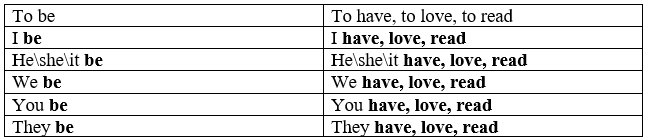
The present subjunctive
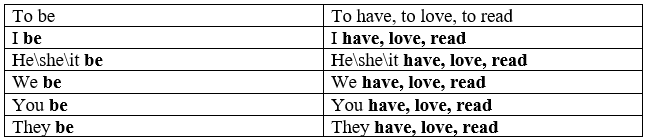
The past subjunctive
The Present Subjunctive denotes an action referring to the present or future. This form is seldom used in modern English. It may be found in poetry and in elevated prose and scientific language.
Wretched is the infant’s lot,
Born within the straw-roof’d cot
Be he generous, wise or brave,
He must only be a slave. (Southey)
The Present Subjunctive also occurs in some set expressions.
Suffice it to say that he soon came back.
Far be it from me to contradict you.
In American English the present subjunctive is used not only in the above mentioned cases but also in colloquial language.
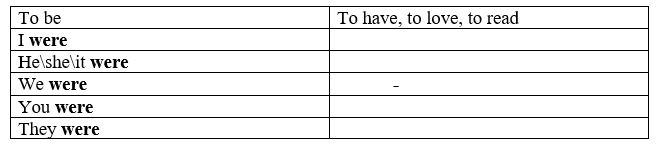
The past subjunctive is widely used in Modern English. This form is more active than present subjunctive. The term “past subjunctive” is not expressed past action therefore it denotes an unreal condition referring to the present or future. In the past subjunctive the verb to be has the form “were” for all persons, singular and plural.
If I were ill, I should like to be nursed by you. (Bennet)
The next form of the subjunctive mood is analytical form. This form consists of the mood auxiliaries should, would, may (might) or shall (which is seldom used). Mood auxiliaries have developed from modal verbs, which have lost their modal meaning. In old English period modal verbs are used to present emotional attitude to real fact. Still there are cases when mood auxiliaries retain a shade of modality.
3. The usage of The Subjunctive Mood.
3.1 In simple sentences
The synthetic forms of The Subjunctive are more frequent than the analytical form in simple sentences
a) To express wish Success attend you!
b) To express an unreal wish If only he were free!
c) In oaths and imprecation Manners be hanged!
d) In some expressions Be it so!
3.2 In complex sentences
The Subjunctive Mood is used in conditional sentences unreal to express an unreal condition and an unreal consequence. The past subjunctive of the verb to be is used subordinate clause, with other verbs the same meaning is expressed by the Past Indefinite of the Indicative Mood. In some grammar literatures this structure is explained homonymous function. We can find The Subjunctive Mood in many types of conditional sentences. I will try to draw clearly table which you can understand easily.
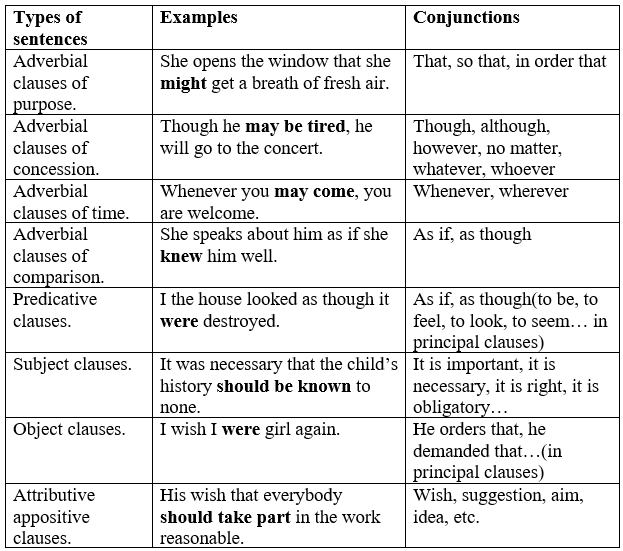
All sentences in this table are according to present or future but most of them are presented by past form of the verbs. It is precisely this aspect that gives difference between the corresponding form of indicative and imperative moods. But in some sentences we can’t catch the meaning of the subjunctive mood, in sentences past subjunctive was expressed by other notional verbs. In past subjunctive we use “were” for all persons singular and plural. In some grammars these forms are considered to be the forms of The Subjunctive Mood homonymous with the forms of the Indicative mood.
4 The connection of Modality and The Subjunctive Mood.
Mood is a grammatical notion, whereas modality is a semantic notion relating to such concepts as possibility, necessity, obligation, etc. The word “modal” is, in origin, connected with the mode, manner, or fashion of doing something, rather than the substance. But from the 16 century onwards, it was used in logic and philosophy to refer to propositions involving the affirmation of possibility and impossibility, existence and non-existence, contingency and necessity, and this is the meaning that has been taken into grammar.
It was necessary that the child’s history should be known to none. (Trollope)
It was necessary that the child’s history be known to none.
The child’s history mustn’t be known to anyone.
I will try to give three sentences which have the same meaning all of them. All of sentences denote an action referring to the future. The first structure of sentences is given by analytical form and in the second is used synthetic form of The Subjunctive Mood. In both of sentences The Subjunctive Mood is used in subject clauses after a principal clause of the type “It is necessary”, the synthetic subjunctive with the mood auxiliary “should” for all persons and the synthetic subjunctive is used. The third sentence is given by modal verb with “must”. The expression “It was necessary” and “must” modal verb give the same meaning here. Though every sentence has different structure, they will express the same meaning and translation, without difference. The subjunctive mood shows actions as non-facts, but the range of meaning proposed includes those which are not modal (unreal condition, unlikely condition, consequence of unreal condition, wish purpose and the like). Moreover, their means of expressions are heterogeneous (synthetic, analytical as well as homonymous), which seems suspects.
- Lamberts, J.J. (1972), A Short Introduction to English Usage, New York, McGraw-Hill Book Company
- Thomson A. J, Martinet A. V. (1980), A Practical English Grammar, Oxford, Oxford University Press
- Fischer O. (1992), ‘Syntax,’ in Blake N “The Cambridge History of the English Language” Volume 2, Cambridge, Cambridge University Press, pp. 207-408
- Barkhudarov L.S. Shteling D.A “Грамматика Английского Языка”
There are three ways of expressing the Subjunctive mood — synthetic forms, analytical forms and some forms of the Indicative mood used in the meaning of the Subjunctive mood.
Synthetic forms were widely spread in Old English where different forms have different flexions. But in cause of time most of those flexions were lost. So that in Modern English there are but two synthetic forms of the Subjunctive mood — the of all verbs and the of the verb .
The Present Subjunctive is the first form of the verb (the Infinitive without the particle ) for all persons singular and plural.
The Past Subjunctive of the verb has the form for all persons singular and plural.
The Present Subjunctive is but seldom used in modern colloquial English. It is mostly used in the language of official documents such as International treats, in poetry, in elevated prose and in some set-expressions:
Be he generous, wise and brave
He will only be a slave.
Если бы он был щедрым, мудрым и храбрым
Он был бы просто рабом.
Long live the King!
Да здравствует король!
Be it so!
Да будет так!
Far be it from me to contradict you!
Да у меня и в мыслях нет противоречить вам.
God bless you!
Будь здоров!
God Bless America!
Боже, храни Америку!
Fuck you.
Чтоб тебя.
But in American English the Present Subjunctive is widely used in colloquial speech.
She insisted that they drink to her health.
Она настояла на том, чтобы они выпили за ее здоровье.
The Past Subjunctive is widely used in colloquial speech both in British and in American English. For example: in the subordinate clause of conditional sentences.
The term is merely traditional and does not mean that the action refers to the past. In the contrary in some models, it denotes an action referring to the present or future in other models — an action is the simultaneous with the action in the principal clause.
If he were here now, he would help us.
Если ли бы он был здесь сейчас, он бы помог нам.
I wish she were not married.
Жаль, что она замужем.
He wished she were not married.
Хотел бы он, чтобы она не была замужем.
The analytical forms of the Subjunctive mood consist of the mood auxiliaries: , , , plus the bare Infinitive of the notional verb.
If he joined them, they this work easier.
Если бы он присоединился к ним, они бы сделали эту работу быстрее.
However this program , we cannot discuss it now.
Какой бы интересной не была эта программа, мы не можем обсуждать ее сейчас.
The forms of the Indicative mood used in the meaning of the Subjunctive mood are the Past Indefinite and the Past Perfect (the Past Continuous and the Past Perfect Continuous — also occur here).
If he money now, he would buy my Opel.
Если бы у него были сейчас деньги, он бы купил мой опель.
If he money, he would have bought my Opel.
Если бы у него тогда были деньги, он бы купил мой опель.
This article in Russian
15 октября 2018
И по-русски, и по-английски звучит совсем непонятно. Без этих терминов будет сложно рассказать об использовании наклонения, так что давай разберемся, что все это значит.
Сослагательное наклонение – это такая грамматическая конструкция, которая выражает предполагаемое или желаемое действие, а также показывает субъективное настроение говорящего. Проще говоря, если вы хотите выразить свою неуверенность в чем-то, предположение или желание, то сослагательное наклонение поможет вам.
Примеры:
I suppose (that) the lesson be postponed. — Полагаю, (что) урок отложен.
If I had had his address, I would have visited him. — Если бы у меня был его адрес, я бы навестил его.
I wish I were there now. — Я бы хотел сейчас быть там.
Мы используем сослагательное наклонение в трех формах:
- Present Subjunctive (Настоящее)
- Past Subjunctive (Прошедшее)
- Past Perfect Subjunctive (Прошедшее завершенное)
Present Subjunctive редко используется в современном английском, эта конструкция более характерна для художественной, научной литературы и официальных документов. Но также ее можно встретить в американском английском.
Последние два представлены условными предложениями с нереальным условием и предложениями с глаголом WISH.
.png)
Мы можем составить конструкцию сослагательного наклонения:
- с помощью особых форм смыслового глагола (The Present Subjunctive и The Past Subjunctive)
- с помощью вспомогательных глаголов (should/ would/ may + инфинитив смыслового глагола)
А теперь конкретно:
The Present Subjunctive
It is important that he take these two pills twice a day. — Важно, чтобы он принимал эти 2 таблетки дважды в день.
It is advisable that we have some rest this night. — Желательно, чтобы мы немного отдохнули этой ночью.
It is necessary that she decide right now. — Необходимо, чтобы он решил прямо сейчас.
She demands that she be allowed to speak to her lawyer. — Она требует, чтобы ей дали говорить с ее адвокатом.
He demands that the contract be signed tomorrow. — Он требует, чтобы контракт был подписан завтра.
He demanded that the contract be signed tomorrow. — Он требовал, чтобы контракт был подписан завтра.
He demanded that the contract be signed yesterday. — Он требовал, чтобы контракт был подписан вчера.
The Past Subjunctive
If she spoke one more language, she could get a good job there. — Если бы она говорила на еще одном языке, она могла бы получить там хорошую работу.
If I were you, I would not do it. — На твоем месте я бы не делала этого.

The Past Perfect Subjunctive
If I had talked to him yesterday, I would have known about it. — Если бы я поговорил с ним вчера, я бы это знал.
What would have happened if you had not finished the project? – I think my boss would have fired me. Что бы случилось, если бы ты не закончил проект? Думаю, мой босс уволил бы меня.
Should/ would/ may + инфинитив в придаточной части
I wish you would stop disturbing me. — Я хочу, чтобы ты перестал беспокоить меня.
It is important that everything should be ready by two o’clock. — Важно, чтобы все было готово к 2 часам.
Конструкции с wish
Пожелания, относящиеся к прошлому, настоящему, будущему.
I wish I had known it before that event. — Жаль, что я не знала этого до того события.
She wishes she had not bought it. — Она жалеет, что купила это.
I wish you were here. — Жаль, что тебя здесь нет.
He wishes he didn’t have to do it tomorrow. — Ему жаль, что нужно сделать это завтра.
Хочу на курс английского языка Intermediate
1. My advice is that you should take someone with you. 2. My dearest wish is that my daughter should marry a young man I could approve of. 3. Our suggestion was that we take a tour round the city before going to the gallery. 4. His fear was lest he should be given away. 5. Sara’s apprehension is lest someone should discover her secret. 6. Our main condition was that the paper should be signed by two witnesses. 7. The old man’s wish was that we should not leave him alone. 8. The lawyer’s demand was that the trial be moved to another county. 9. The order was that we should all gather in the hall. 10. The motion was that the grand jury indict him. 11. The general demand was that the man be acquitted. 12. My fear was lest Ethel should notice her purse was missing. 13. All I ask is that you should listen to me. 14. All I ask is that you listen to me. 15. The order was that the things should be packed in ten minutes. 16. God, all I’m asking is that we be honest with each other.
1. Мой вам совет — начните готовиться к экзамену заранее. 2. Мы все боялись, как бы крыша дома не рухнула. 3. Я хотел бы, чтобы вы перестали со мной спорить из-за пустяков. 4. Требуется, чтобы это правило соблюдали все. 5. Моё предложение сводилось к тому, чтобы перенести собрание на другой день. 6. Всё, чего мы хотим, это дать ему ещё один шанс. 7. Он опасался, что над его предложением будут смеяться. 8. Единственное приемлемое предложение заключалось в том, чтобы оставить всё как есть. 9. Наша цель заключается в том, чтобы обеспечить всем участникам конкурса равные возможности. 10. Моё единственное пожелание — не разрешайте ему сделать всё по-своему. 11. Наше предложение заключалось в том, чтобы разработать новую программу исследований. 12. Все, чего я прошу, это чтобы вы не меняли свое решение. 13. Больной попросил, чтобы его перевели в другую палату. 14. Его идея состоит в том, чтобы мы подумали об этом вместе. 15. Наше общее предложение заключается в том, чтобы все ораторы выступали не более пяти минут.
2. Predicative clauses joined by the link verbs to be, to seem, to look, to feel, to taste, to smell, to sound, etc.
1. He felt as if he were a student again. 2. She looked as though she had always known something like that would happen. 3. It was as if he were looking at himself and heard his own voice say “I don’t know.” 4. It’s not as if you owed him anything. 5. It’s not as if they had done anything wrong. 6. It seems as if the house had been broken into. 7. It seemed as if he was being talked into something illegal. 8. The food tasted and smelt as if no one had bothered to cook it. 9. “Don’t touch it!” That sounded as if she really had a right to give orders. 10. Joseph felt as though he had been betrayed. 11. It seemed as if they were not getting anywhere. 12. It was as if no one was going to help them. 13. They stared at each other in the silence of the house and it was as if they were listening for distant footsteps.
Exercise 5. Use the correct form of the infinitives in brackets.
1. He felt as if Robert (to be about) to tip him, but thought better of it. 2. The house looked as though it (not to use) for years. 3. It was as if they still (to deceive) themselves. 4. He looked as if he just (to wake up). 5. It’s not as if he (to want) to hurt you or something. It was just a joke, you know. 6. It seemed as if he (to be going) to answer back. 7. They all felt as if the boy (to conceal) something, but they couldn’t find out what. 8. The room smelt as if someone (to smoke) there. 9. Her manner is humiliating, it’s as if she (to be) the boss around here. 10. He always looks as if he (to be) a little dumb, but believe me he’s no fool. 11. It looks as if he still (may write) that book he so desperately wants to publish. 12. It seemed as if no one (to discover) their plot yet. 13. It looked as if no one (can get) past him. But there was someone in the house — someone had got past him. 14. Her vision blurred. It was almost as if she (to wait) to wake up.
*Exercise 6. Use the correct form of the infinitives in brackets.
1. She smiled at him prettily but her hands bled and she looked as if she (to be going) to faint. 2. Bateman felt as though someone (to give) him a violent blow. 3. She sounded as if she (to talk) to someone distasteful. 4. He looked as though he (not to move) since I left him the previous night. 5. “It sounds as though there (to be) three or four men down there,” said my father. 6. He looked as if he already (to decide) on some action. 7. It looked as though he (to be) filled with an overwhelming joy. 8. The sky looked as though it (to be) grey for months. 9. Robert’s voice sounded as though he (to shout) into the wind for hours. 10. Her stillness and her strange words made me feel as if I still (to dream). 11. It looks as though it (to set) in fine. 12. Her voice sounded as though something (to offend) her. 13. Whenever I saw them it looked as though they (to be) on very good terms with one another. 14. His tanned, smooth skin looked as though a razor never (to touch) it. 15. You look as though you (not to have) much sleep the last night or two. 16. He looked as if he (to step) from the pages of “Pickwick Papers”.
*Exercise 7. Use the infinitives in brackets in the correct form.
1. I don’t see why you sound as if Betty cleverly (to dodge) something. 2. “You are a monster. You frighten me.” Graham Marshall felt as if he (to slap) in the face. 3. You’ve been so twitchy the last week. You look as if you (to do) something you shouldn’t. 4. “Yes. I understand that.” But he didn’t sound as if he (to understand). 5. He felt as if he just (to admit) to the company’s most exclusive club. 6. One day he would send for me, and he would sound as if none of it ever (to be). 7. You seem as if it all (to settle). 8. Isn’t he famous? He looks as if he (to be). 9. He just seemed as though we (to meet) only a few months back instead of years. 10. It was as if the artist (to strive) to put in canvas something that his talent was not sufficient to translate into paint. 11. Grant switched on his lamp, examined the pattern it made on the ceiling and he looked as if he never (to see) it before. 12. “We’ll miss you, you know,” she said, and her big eyes looked as if they (may brim) with tears.
Exercise 8. Transform the sentences according to the given pattern:
Jane has never been to France but she speaks good French. – Jane sounds as if she had lived in France for a long time.
1. From what Mr. Dell says one might think he has never heard about such devices. 2. Looking at these houses one might imagine that they are convenient. 3. The coat wasn’t dry-cleaned. But I thought it had been. 4. Jane wasn’t tired but she looked tired. 5. The car is badly damaged. One might think it had collided with a dozen lorries. 6. He is out of breath. One may think he has run a mile. 7. I’m not a child. Don’t treat me as a child.
1. Ситуация выглядела так, будто всё было подстроено заранее. 2. Казалось, им больше ничего не угрожает. 3. У меня было такое чувство, будто за мной кто-то наблюдает. 4. У вас такой вид, словно вы не можете решить, что вам делать. 5. Майк выглядит так, как будто ему только что сообщили какую-то отличную новость. 6. Мне кажется, что он не сам всё это придумал. У него такой вид, будто он повторяет чьи-то слова. 7. Почему у тебя такой вид, будто ты не веришь нам? Ведь мы же раньше никогда тебя не обманывали. 8. Кажется, они очень хорошо знают друг друга. 9. Кажется, когда-то они очень хорошо знали друг друга. 10. Когда она заговорила, её голос звучал так, как будто она долго плакала или кричала. 11. С каждым днем ему всё больше казалось, что он никогда не уезжал из этого дома, что он жил здесь всегда. 12. У нее такой вид, как будто она не знает, что сказать. 13. Она краснеет, как будто он ее ударил. 14. У меня было такое чувство, будто мы говорим с ним на разных языках. 15. У нее был такой вид, как будто она вот-вот рассмеётся. 16. Она побледнела, как будто внезапно плохо себя почувствовала. 17. Я чувствую себя так, как будто бы я не спала ночь. 18. Она поёт, как профессиональная певица. 19. У вас такой вид, будто вы что-то потеряли. Может, я могу вам помочь? 20. Он выглядит так, как будто впервые ведет эту передачу.
Understanding and Using the Subjunctive Mood
The subjunctive mood is one of three grammatical moods. We’ll explain what moods are, elaborate on the subjunctive mood, and provide example sentences.

“Subjunctive mood” is one of the grammatical moods. Are you familiar with it?
The subjunctive mood is a form of a verb used to express statements that are imagined or contrary to the fact (If I were a millionaire, I would buy my parents a house). It’s also used to convey a wish or request (I wish that my best friend were still living in the same city as me).
What Are Grammatical Moods?
To thoroughly understand the subjunctive mood, you must know what grammatical moods are.
The mood of a verb reflects the writer’s (or speaker’s) attitude and the intent of the sentence. There are three primary grammatical moods:
1. Indicative: Is the most common and states facts or opinions, and asks questions.
Who will drive the car?
2. Imperative: Gives commands and instructions.
Larry, drive the car back to the house.
3. Subjunctive: Expresses statements that are contrary to the fact or that convey a wish or request.
If I were her, I would ask Jane to drive instead.
Keep in mind that grammatical moods are entirely different from tenses.
Now, let’s take a deeper look into the subjunctive mood.
What Does “Subjunctive Mood” Mean?
We ask that he sing the song in its entirety.
Usually, the pronoun he would be paired with the third-person singular form of sing: he sings. But because this sentence is expressing a request, it makes sense to use sing.
What’s the difference between conditional and subjunctive mood?
Depending on different linguistic sources, there are other less common grammatical moods, including the conditional mood. It’s not uncommon for people to mix up the conditional mood and subjunctive mood. The conditional mood expresses conditional statements (usually called if-clauses). In other words, the occurrence of one action is conditional (or depends on) another action.
Forming the Subjunctive Mood
In the present subjunctive, the base form of the verb is used regardless of the subject. This holds true even with the verb to be.
I recommend you learn common Korean phrases for your trip.
It is important that she be ready at 5:00 on the dot.
A verb using the past subjunctive mood is the same as the simple past tense (except for to be, which uses were regardless of the subject).
Kim spends money as if she had all the money in the world.
The girls look up to their older sister as if she were a princess.
The present subjunctive mostly refers to the future, while the past subjunctive usually refers to the present or past.
So Long Subjunctive Mood?
Some say that the subjunctive mood is slowly vanishing from the English language. In informal settings, it’s not unusual to see a verb in the subjunctive mood, but in the same form as other tenses. For example:
If Cam were to help me, I’d be done with the project much sooner.
If Cam was to help me, I’d be done with the project much sooner.
Both sentences express a hypothetical situation (and convey the same message), although the first one is considered more formal.
Understanding and using verbs correctly according to their mood can be challenging at first. If you need additional guidance, LanguageTool can help by correcting any misused verb. This multilingual text editor can also help rephrase your sentences to better suit your desired tone and style.

This mnemonic device may help you remember what “subjunctive mood” entails.