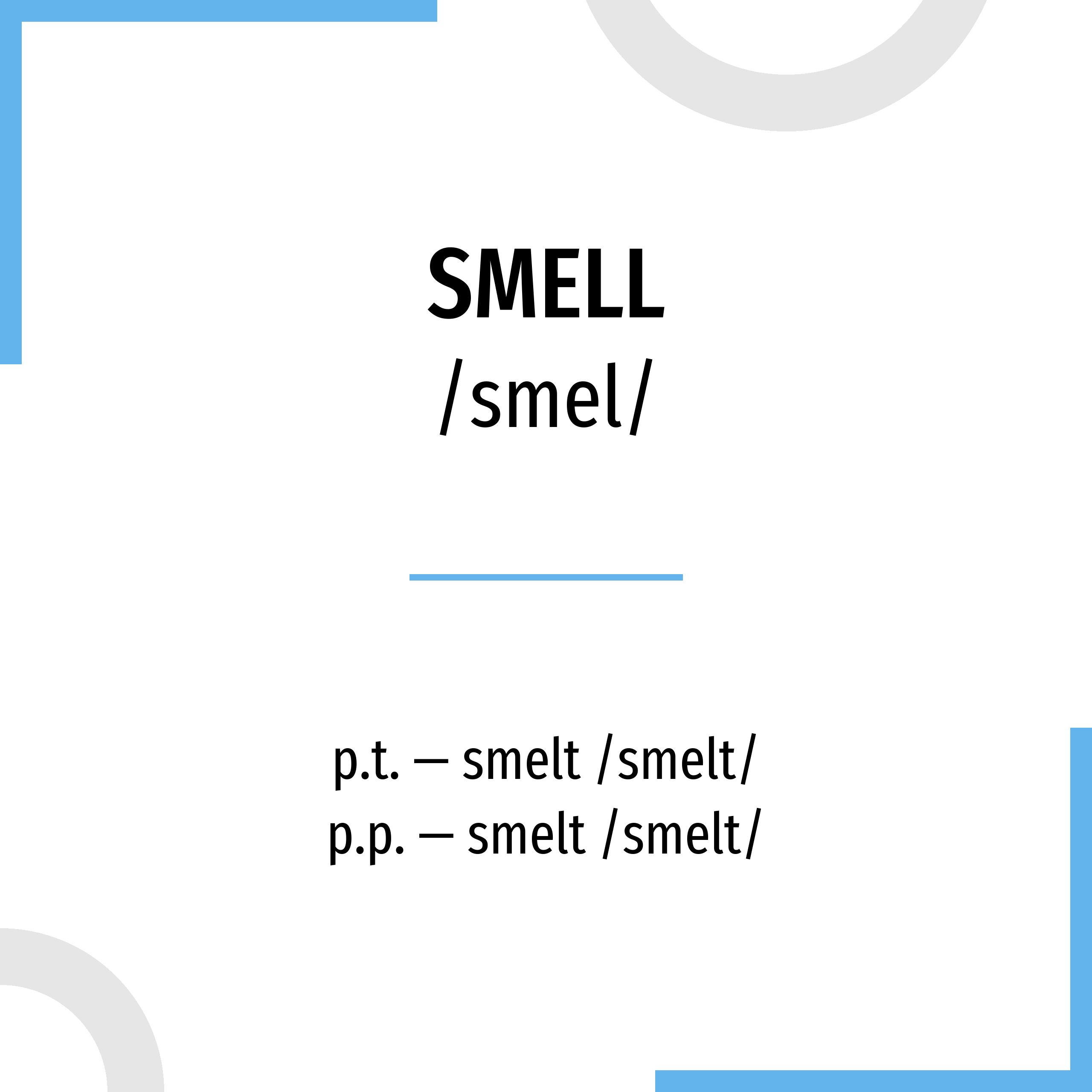
- Перевод smell с английского на русский
- Спряжение smell в английском языке во всех временах, лицах и числах
- Continuous Tense — Длительное время
- Perfect Tense — Совершенное время
- Perfect Continuous Tense — Длительное совершенное время
- Conditional — Условное наклонение
- Smell in present simple
- Вопрос
- Smell in present continuous
- Отрицание
- Smell in present perfect
- Smell in present perfect continuous
- Smell in past simple
- Smell in past continuous
- Smell in past perfect
- Smell in past perfect continuous
- Smell in future simple
- Smell in future continuous
- Smell in future perfect
- Smell in future perfect continuous
- Smell in conditional present
- Smell in conditional present progressive
- Smell in conditional perfect
- Smell in conditional perfect progressive
- Существительное ↓
- Примеры, ожидающие перевода
- 3 формы глагола smell
- Формы глагола smell в прошедшем времени
- Три формы глагола smell
- Как поставить smell в past simple?
- What is the past tense of smell?
- Временные формы глагола — Verb Tenses
- Правильный или неправильный глагол smell?
- Примеры применения глагола smell
- Smell 3 формы глагола в английском
- Мои примеры
- Примеры с переводом
- Фразовые глаголы
- Возможные однокоренные слова
- Формы слова
- Спряжение глагола «to smell» (Английский язык)
- Предложения
- Таблица неправильных глаголов английского языка
- Глагол smell в английском языке
- 3 формы глагола пахнуть
Перевод smell с английского на русский
Чтобы настройки вступили в силу, необходимо перезапустить тренажер. Перезапустить
Спряжение smell в английском языке во всех временах, лицах и числах
Present Simple Простое настоящее
Past Simple Простое прошедшее
Future Simple Простое будущее
Continuous Tense — Длительное время
Present Simple Continuous Настоящее длительное
Past Simple Continuous Прошедшее длительное
Future Simple Continuous Будущее длительное
Perfect Tense — Совершенное время
Present Perfect Настоящее совершенное
Past Perfect Прошедшее совершенное
Future Perfect Будущее совершенное
Perfect Continuous Tense — Длительное совершенное время
Present Perfect Continuous Настоящее совершенное длительное
Past Perfect Continuous Прошедшее совершенное длительное
Future Perfect Continuous Будущее совершенное длительное
Conditional — Условное наклонение
Глагол to smell – неправильный глагол в английском языке, в переводе на русский означает: пахнуть, понюхать, чувствовать запах, нюхать.
Smell in present simple
He does not smell She does not smell It does not smell
Вопрос
Does he smell? Does she smell? Does it smell?
Smell in present continuous
He is smelling She is smelling It is smelling
Отрицание
You are not smelling
He is not smelling She is not smelling It is not smelling
We are not smelling
They are not smelling
Is he smelling? Is she smelling? Is it smelling?
Smell in present perfect
I have smelt/smelled
You have smelt/smelled
He has smelt/smelled She has smelt/smelled It has smelt/smelled
We have smelt/smelled
They have smelt/smelled
I have not smelt/smelled
You have not smelt/smelled
He has not smelt/smelled She has not smelt/smelled It has not smelt/smelled
We have not smelt/smelled
They have not smelt/smelled
Have I smelt/smelled?
Have you smelt/smelled?
Has he smelt/smelled? Has she smelt/smelled? Has it smelt/smelled?
Have we smelt/smelled?
Have they smelt/smelled?
Smell in present perfect continuous
I have been smelling
You have been smelling
He has been smelling She has been smelling It has been smelling
We have been smelling
They have been smelling
I have not been smelling
You have not been smelling
He has not been smelling She has not been smelling It has not been smelling
We have not been smelling
They have not been smelling
Have I been smelling?
Have you been smelling?
Has he been smelling? Has she been smelling? Has it been smelling?
Have we been smelling?
Have they been smelling?
Smell in past simple
He smelt/smelled She smelt/smelled It smelt/smelled
He did not smell She did not smell It did not smell
They did not smell
Did he smell? Did she smell? Did it smell?
Smell in past continuous
He was smelling She was smelling It was smelling
They were smelling
I was not smelling
You were not smelling
He was not smelling She was not smelling It was not smelling
We were not smelling
They were not smelling
Was he smelling? Was she smelling? Was it smelling?
Were they smelling?
Smell in past perfect
I had smelt/smelled
You had smelt/smelled
He had smelt/smelled She had smelt/smelled It had smelt/smelled
We had smelt/smelled
They had smelt/smelled
I had not smelt/smelled
You had not smelt/smelled
He had not smelt/smelled She had not smelt/smelled It had not smelt/smelled
We had not smelt/smelled
They had not smelt/smelled
Had I smelt/smelled?
Had you smelt/smelled?
Had he smelt/smelled? Had she smelt/smelled? Had it smelt/smelled?
Had we smelt/smelled?
Had they smelt/smelled?
Smell in past perfect continuous
I had been smelling
You had been smelling
He had been smelling She had been smelling It had been smelling
We had been smelling
They had been smelling
I had not been smelling
You had not been smelling
He had not been smelling She had not been smelling It had not been smelling
We had not been smelling
They had not been smelling
Had I been smelling?
Had you been smelling?
Had he been smelling? Had she been smelling? Had it been smelling?
Had we been smelling?
Had they been smelling?
Smell in future simple
He will smell She will smell It will smell
You will not smell
He will not smell She will not smell It will not smell
They will not smell
Will he smell? Will she smell? Will it smell?
Smell in future continuous
I will be smelling
You will be smelling
He will be smelling She will be smelling It will be smelling
We will be smelling
They will be smelling
I will not be smelling
You will not be smelling
He will not be smelling She will not be smelling It will not be smelling
We will not be smelling
They will not be smelling
Will I be smelling?
Will you be smelling?
Will he be smelling? Will she be smelling? Will it be smelling?
Will we be smelling?
Will they be smelling?
Smell in future perfect
I will have smelt/smelled
You will have smelt/smelled
He will have smelt/smelled She will have smelt/smelled It will have smelt/smelled
We will have smelt/smelled
They will have smelt/smelled
I will not have smelt/smelled
You will not have smelt/smelled
He will not have smelt/smelled She will not have smelt/smelled It will not have smelt/smelled
We will not have smelt/smelled
They will not have smelt/smelled
Will I have smelt/smelled?
Will you have smelt/smelled?
Will he have smelt/smelled? Will she have smelt/smelled? Will it have smelt/smelled?
Will we have smelt/smelled?
Will they have smelt/smelled?
Smell in future perfect continuous
I will have been smelling
You will have been smelling
He will have been smelling She will have been smelling It will have been smelling
We will have been smelling
They will have been smelling
I will not have been smelling
You will not have been smelling
He will not have been smelling She will not have been smelling It will not have been smelling
We will not have been smelling
They will not have been smelling
Will I have been smelling?
Will you have been smelling?
Will he have been smelling? Will she have been smelling? Will it have been smelling?
Will we have been smelling?
Will they have been smelling?
Smell in conditional present
He would smell She would smell It would smell
You would not smell
He would not smell She would not smell It would not smell
We would not smell
They would not smell
Would he smell? Would she smell? Would it smell?
Smell in conditional present progressive
I would be smelling
You would be smelling
He would be smelling She would be smelling It would be smelling
We would be smelling
They would be smelling
I would not be smelling
You would not be smelling
He would not be smelling She would not be smelling It would not be smelling
We would not be smelling
They would not be smelling
Would I be smelling?
Would you be smelling?
Would he be smelling? Would she be smelling? Would it be smelling?
Would we be smelling?
Would they be smelling?
Smell in conditional perfect
I would have smelt/smelled
You would have smelt/smelled
He would have smelt/smelled She would have smelt/smelled It would have smelt/smelled
We would have smelt/smelled
They would have smelt/smelled
I would not have smelt/smelled
You would not have smelt/smelled
He would not have smelt/smelled She would not have smelt/smelled It would not have smelt/smelled
We would not have smelt/smelled
They would not have smelt/smelled
Would I have smelt/smelled?
Would you have smelt/smelled?
Would he have smelt/smelled? Would she have smelt/smelled? Would it have smelt/smelled?
Would we have smelt/smelled?
Would they have smelt/smelled?
Smell in conditional perfect progressive
I would have been smelling
You would have been smelling
He would have been smelling She would have been smelling It would have been smelling
We would have been smelling
They would have been smelling
I would not have been smelling
You would not have been smelling
He would not have been smelling She would not have been smelling It would not have been smelling
We would not have been smelling
They would not have been smelling
Would I have been smelling?
Would you have been smelling?
Would he have been smelling? Would she have been smelling? Would it have been smelling?
Существительное ↓
Your feet smell!
I smell trouble.
Я чую неприятности.
The soup smells good.
Суп вкусно /хорошо/ пахнет.
Dogs have a very good sense of smell.
У собак очень хорошее обоняние.
The air was filled with the smell of flowers.
Воздух был напоен ароматом цветов.
I can smell burning.
Я чувствую запах гари.
The sharks will smell blood.
Акулы учуют запах крови.
Can you smell something?
Чувствуешь, чем-то пахнет?
Mm! Something smells good!
Мм! Чем это так вкусно пахнет?
I’ve got a cold and I can’t smell.
У простудился и мой нос ничего не чувствует.
She bent down and smelt the flowers.
Она наклонилась и понюхала цветы.
My clothes smelt of smoke.
Моя одежда пропахла дымом.
There’s a delicious smell coming from the kitchen.
Из кухни чем-то очень вкусно пахнет.
He smelt danger.
Он почувствовал опасность.
I think I smell gas.
Кажется, я чувствую запах газа.
What’s that nasty smell?
Чем это так воняет? / Что это за противный запах?
His breath smelt of garlic.
От него пахло чесноком.
What’s that funny smell?
Что за странный запах?
The smell made her retch.
От этой вони её стошнило.
The smell stayed in the room
Запах пропитал всю комнату.
I could smell alcohol on his breath.
От него пахло алкоголем.
It smells like rotten eggs.
Воняет как тухлые яйца.
Add only a smell of garlic.
Добавьте чуть-чуть чеснока.
The stew smelled delicious.
Рагу пахло очень вкусно.
The smell of chicken soup wafted up to my bedroom.
Запах куриного супа донёсся до моей спальни.
The smell repelled him.
Запах вызвал у него отвращение.
He can smell out trouble.
Он шкурой /нутром/ чувствует беду.
This car smells like mold.
Этот автомобиль пахнет /воняет/ плесенью.
I could smell onions frying.
Я чувствовал запах жареного лука.
She noticed a smell of gas.
Она обратила внимание на запах газа.
Примеры, ожидающие перевода
He could smell something delicious cooking.
I smell again the peculiar and dynamic smell of Gillespie’s science room.
3 формы глагола smell
📚 Глагол smell имеет значения: пахнуть, иметь запах, обонять, чуять, нюхать, вонять, иметь дурной запах.
Формы глагола smell в прошедшем времени
👉 Формы глагола smell в настоящем и прошедшем времени 2-я и 3-я форма. ❓ Как будет smell в прошедшем времени past simple.
Три формы глагола smell
🎓 Как поставить глагол smell в Past Simple, Future Simple, Present Perfect, Past Perfect, Future Perfect? 👉 Всё очень просто, в этих временах прошедшего, будущего и совершённого времени, в английском используются 2я и 3я форма глагола:
Как поставить smell в past simple?
Если вы не совсем поняли какую форму для smell нужно использовать в прошедшем времени, будет: smell в past simple — smelt.
What is the past tense of smell?
The past tense of smell is smelt. The past participle of smell is smelt.
Временные формы глагола — Verb Tenses
Past simple — smell в past simple, будет smelt. (V2) Future simple — smell в future simple будет smell. (will + V1) Present Perfect — smell в present perfect будет smelt. (havehas + V3) Past Perfect — smell в past perfect будет smelt. (had + V3)
Правильный или неправильный глагол smell?
👉 Правильный это глагол ли нет? Глагол smell это неправильный глагол.
Примеры применения глагола smell
Вместе с smell, часто смотрят глаголы ski and smoke.
Smell 3 формы глагола в английском
заменяет слово (для экономии места в примерах).
infinitive (первая форма глагола) past (вторая форма глагола) past participle (третья форма глагола)
Перевод на русский (translation to Russian) смотрите все значения в онлайн-словарях
A B C D E F G H I J K L M N O P Q R S T U V W X Y Z arise arose arisen появляться, подниматься, возникать awake awoke, awaked awoken, awaked formal будить; просыпаться awaken awakened awakened regular verb formal пробуждать(ся) A B C D E F G H I J K L M N O P Q R S T U V W X Y Z be (is, are, am) was, were been быть bear
on formal находить, обнаруживать случайно; сваливаться, обрушиваться;
запах, обоняние, амбре, чуточка, пахнуть, чувствовать запах, понюхать
- дурной запах, вонь, зловоние
what a smell! — какая вонь!
- намёк, признак, след
add only a smell of garlic — положите только самую малость чеснока
to take a smell at smth. — понюхать что-л.a smell of powder — боевой опытa smell of the lamp — кабинетность, вымученность (стиля и т. п.); нудный педантизм; наукообразность
to smell gas — слышать /чувствовать/ запах газаthe camels smelt the water a mile off — верблюды чуяли воду за милю от колодца
he smelt a plot — он почувствовал, что готовится заговорhe smelt trouble — он почувствовал, что дело неладно
- нюхать, вдыхать запах
to smell smth., to smell at smth. — понюхать что-л.the dog smelt at my shoes — собака обнюхала мои башмаки
- пахнуть; иметь запах
the whole affair smells of plotting — вся затея пахнет заговоромhis offer smells of treachery — его предложение граничит с предательством
- дурно пахнуть, вонять; иметь дурной запах
Мои примеры
it had the smell of treason — от этого пахло изменой / предательством the musty smell of old books — затхлый запах старых книг the smell of newly mown hay — запах свежескошенного сена disturbance in smell — нарушения обоняния a faint, elusive smell — слабый, почти неуловимый запах hallucination of smell — обонятельная галлюцинация to smell of perfume — пахнуть духами piny smell — сосновый запах pleasant smell / colour / shape — приятный запах, цвет, форма sense of smell — обоняние acrid / pungent smell — едкий, острый запах faint / slight smell — слабый запах
Примеры с переводом
Твои ноги воняют!
ещё 23 примера
As the smell of garbage drifted through the air, she wrinkled her nose in disgust.
Для того чтобы добавить вариант перевода, кликните по иконке , напротив примера.
Фразовые глаголы
smell about — разнюхивать, принюхиваться, выслеживать smell out — пронять, учуять, пронюхивать, выслеживать, разнюхивать smell round — выслеживать, разнюхивать, принюхиваться smell up — провонять, наполнить вонью
Возможные однокоренные слова
smeller — удар по носу, нос smelly — вонючий, зловонный, дурно пахнущий smelling — обоняние, пахучий
Формы слова
verb smell smells ing ф. (present participle): smelling 2-я ф. (past tense): smelled or smelt 3-я ф. (past participle): smelled or smelt
noun smell smells
Спряжение глагола «to smell» (Английский язык)
Добавить в закладки Удалить из закладок
Множ. число: smells.
unpleasant smell неприятный запах
organ of smell орган обоняния
good smell приятный аромат
sour smell кислая вонь
smell of kerosene пахнуть керосином
smell the roses нюхать розы
smell the flowers понюхать цветы
smell danger почуять опасность
Предложения
Even the best fish smell when they are three days old. Даже самая лучшая рыба пахнет через три дня.
I smell bacon. От меня пахнет беконом.
We could smell the exhaust. Мы чувствовали запах выхлопа.
I like the smell of bread just out of the oven. Я люблю аромат свежеиспечённого хлеба.
The smell brought back memories of a night some years before. Этот запах навеял воспоминания об одной ночи несколько лет назад.
Don’t touch fish in order that your arms didn’t smell like fish. Не прикасайся к рыбе, чтобы твои руки не пахли рыбой.
A dog’s sense of smell is much keener than a human’s. Собака чувствует запахи гораздо лучше, чем человек.
Tom says he can’t ignore the smell any longer. Том говорит, что он больше не может терпеть этот запах.
The smell of the flowers came in through the open windows of the bus. Запах цветов проник внутрь через открытые окна автобуса.
Something smells good. Что-то приятно пахнет.
It smells like something’s burning. Пахнет чем-то горелым.
This food smells rotten. Эта еда воняет отвратительно.
The shit smells bad. Экскременты дурно пахнут.
It smells like a toilet in here. Здесь пахнет как в туалете.
This place smells bad. Здесь плохо пахнет.
The fruit smells delicious. Этот фрукт пахнет вкусно.
This smells good. Это хорошо пахнет.
This smells bad, but it tastes good. Пахнет ужасно, но на вкус хорош.
This smells great! What are you cooking? Пахнет здорово! Что ты готовишь?
Для общих комментариев по сайту следует использовать раздел Отзывы и предложения.
Вместе с smell, часто смотрят глаголы die and ski.
Таблица неправильных глаголов английского языка

Таблица неправильных глаголов английского языка – это ночной кошмар всех, кто изучал и изучает язык. Нас заставляли учить ее в школе, затем в университете, и уже кажется, что все три формы должны от зубов отскакивать, но использовать их в речи так и не получается. Все потому, что нет практики. Мы приведем таблицу наиболее часто используемых неправильных глаголов в английском языке, а также расскажем, как правильно их учить.
В первом столбике таблицы вы увидите глаголы в той форме, в которой они встречаются в словаре, то есть это инфинитив (Infinitive). Второй столбик – глаголы во времени Past Simple. Глаголы из третьего столбика используйте во временах группы Perfect. И, конечно, все неправильные глаголы даны с переводом на русский, чтобы легче было запомнить слово.
Мы советуем не только учить таблицу с формами и бездумно в сотый раз повторять do-did-done и go-went-gone, но и тренироваться сразу использовать все формы неправильных глаголов английского языка в предложениях и упражнениях. На сайтах englisch-hilfen.de и perfect-english-grammar.com вы найдете более 30 упражнений, посвященных этой теме. Если вы уже хорошо знаете все три формы, то предлагаем вам пройти наш тест в статье “Правильные и неправильные глаголы английского языка: regular and irregular verbs”. Возьмите за правило учить по десятку глаголов в день, затем выполнять пару упражнений, и вы сами не заметите, как естественно начнете употреблять их в речи.
Если вы нашли ошибку, пожалуйста, выделите фрагмент текста и нажмите Ctrl+Enter.
Глагол smell в английском языке
Слово «пахнуть» имеет 2 значения с различными морфологическими признаками. Покажем формы изменения слова для каждого значения.
Глагол пахнуть совершенного вида, поэтому не употребляется в настоящем времени.
Глагол пахнуть несовершенного вида, поэтому не употребляется в будущем времени. Для создания будущего времени используйте конструкции: буду пахнуть, будешь пахнуть, будете пахнуть и т.д.
3 формы глагола пахнуть
В английском языке глаголы у которых временные формы образуются нестандартным способом называются неправильными, то есть это те глаголы которые не соответствуют нормальному правилу добавления -d, -ed или -ied, чтобы сформировать их вторую и третью форму.