тест по английскому языку на тренировку времен группы Present
- Скачать
- Методические разработки, презентации и конспекты
- Времена группы Present (Simple, Continuous, Perfect, Perfect Continuous) — повторение
- Времена группы Present (Simple, Continuous, Perfect, Perfect Continuous). Упражнения
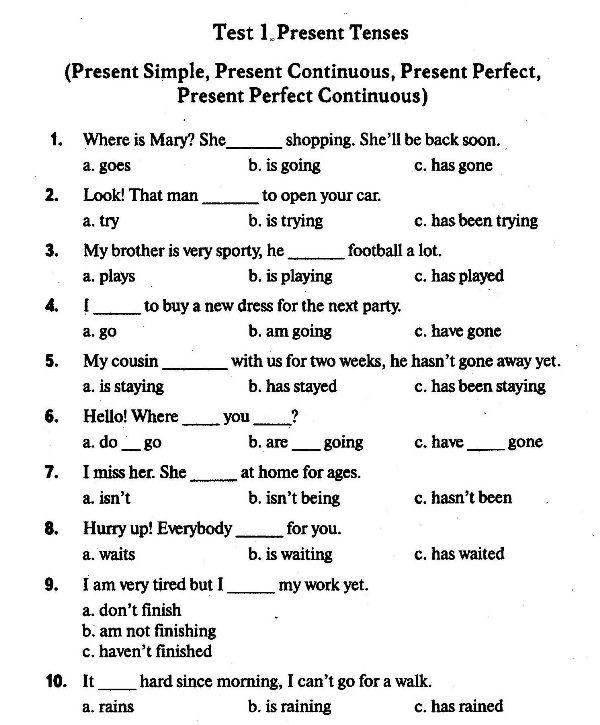
- Заключительный тест на времена группы Present
- Просмотр содержимого документа «Тест на времена группы Present»
- Смотрите любимых YouTube-блогеров и учите по ним английский
- Похожие тесты
- Present Simple / Present Continuous
- 49 Comments on Тест на знание времен Present Simple и Present Continuous
- Present tenses / the Future
- 7 Comments on Тест Present tenses / the Future
- Present Simple / Past Simple
- 49 Comments on Тест на знание времен Present Simple и Past Simple
- Тест на настоящее время для начинающих
- Тест на настоящее время — вопросы потруднее
- Тест на времена Simple — более трудные случаи
- Упражнение 1. Глагол в Present Simple
- Упражнение 2. Неправильные глаголы
- Упражнение 3. Времена Continuous
- Упражнение 4. Present Simple или Present Continuous?
- Упражнение 5. Времена Simple или Continuous?
- Упражнение 6. Past Simple или Present Perfect?
- Упражнение 7. Времена Past Perfect и Future Perfect
- Упражнение 8. Времена в английском языке
Скачать
Present Tenses Test
I. Chose the right variant.
II. Use the right tense form of the verb.
Методические разработки, презентации и конспекты
Present Simple, Present Continuous, Present Perfect, Present Perfect Continuous.
Раскройте скобки, чтобы получить Present Simple или Present Perfect.
Раскройте скобки, чтобы получить Present Simple, Present Continuous или Present Perfect.
1. I must know what you (talk) about. 2. I hear that you (be) in this country for some time. 3. He (admire) you greatly. He (see) the play three times. 4. I (not know) what Harry (tell) you. 5. I want to see how much he (change) since I (see) him last. 6. We (be) to the cinema about twice a week since then. 7. Hello, what you (do) here at this late hour? 8. I (think) you never (do) any harm to people? 9. She (rest) since two in the afternoon. 10. I always (stay) at home in the evenings. 11. I (hear) you (look) for a new house.
Раскройте скобки, чтобы получить Present Simple, Present Continuous, Present Perfect Continuous или Present Perfect.
PRESENT TENSES. REVISION .
I.Choose the right variant:
a)writes b)has been writing c)is writing
a)for 3 hours b)every week c)at this moment
a)travels b)is travelling c)has travelled
a)have..been b)are c)is
a)is teaching b)teach c)teaches
a)for 5 years b)now c)already
a)are going b)goes c)go
a)rains b)is raining c)has been raining
II.Put the verb given in brackets in all Present tenses.
Joey (fly) over the ocean.
We have been translating this text for two hours.
a)yes/no b)who c)how long d)or e)tag
IV.Open the brackets putting the verb in the right tense.
I am very busy preparing for my exams. It is 9p.m. now and
I (sit) at my desk. I I(sit) here since 11a.m. I (do/not) all the exersises yet.
Thank you for everything you have done for me. I hope to hear from you soon.
2. Joey is flying over the ocean now.
3. Joey has already flown over the ocean.
4. Joey has been flying over the ocean for two hours.
III. 1. Have we been translating this text for two hours?
2. Who has been translating this text for two hours?
3. How long have we been translating this text ?
4. Have we been translating this text for two or three hours?
5. We have been translating this text for two hours, haven’t we?
IV. Dear Mary.
your letter and now I to you. I am very busy preparing for my exams. It is 9 p.m. now and I at my desk. I here since 11 a.m. I all the exercises yet. Thank you for everything you have done for me. I hope to hear from you soon.
1. Richard walks to school. 2. We live in that house. 3. My father works in the garden. 4. The train stops at the station. 5. The pencils lie on the table. 6. I play with my dog. 7. They help their mother.
II. Put the verbs in brackets into the Present Simple or the Present Progressive Tense.
1. Cuckoos (not build) nests. They (use) the nests of other birds. 2. You can’t see Tom now: he (have) a bath. 3. He usually (drink) coffee but today he (drink) tea. 4. What she (do) in the evenings? — She usually (watch) TV. 5. I won’t go out now as it (rain) and I (not have) an umbrella. 6. The last train (leave) the station at 11.30. 7 He usually (speak) so quickly that I (not understand) him. 8. Ann (make) a dress for herself at the moment. 9. I (wear) my sun-glasses today because the sun is very strong. 10. Tom can’t have the newspaper now because his aunt (read) it. 11. I can’t answer the phone now because I (paper) the sitting-room. 12. How you (get) to work as a rule? — I usually (gо) by bus. 13. I always (buy) lottery tickets but I never (win) anything. 14. You always (write) with your left hand? 15.1 always (write) to him on his birthday. 16. Tom and Jack (have) a long conversation. I wonder what they (talk) about. 17. He never (listen) to what you say. He always (think) about something else. 18. She always (borrow) from me and never (remember) to pay me back. 19. What he (do) to his car now? — I (think) he (polish) it. 20. Who (own) this umbrella? — I (not know). Everybody (use) it but nobody (know) who (own) it.
III. Open the brackets using the Present Simple, the Present Progressive or the Present Perfect Tense.
1. Where’s the old man living now? — He (live) with his married daughter. He usually (live) with her for six months every year. 2. He’s a night watchman, he works at night and (sleep) in the daytime. It’s now noon, and he still (sleep). 3. I usually (go) to bed before midnight. 4. We are in September now, and we (do) a lot of work this year. 5. What’s your brother doing? — He (do) the crossword in the newspaper. He (do) it every day. 6. He wants to buy a car, but first he must learn how to drive, so he (take) driving lessons. 7. He is a very hard worker. He often (work) until midnight. It’s 11 p. m. now and he still (work). 8. It’s 3 p. m. and he (not eat) anything today. 9. Is Mary ready to come out? — No, she still (dress). 10. He often (read) detective stories; he (read) a very good one now. 11. She (not have) a holiday since 1986. 12. What are they talking about? — They (talk) about literature. They always (talk) about literature when they see each other.
In winter Mary _________________ skiing in Switzerland.
is
goes
is going
have been
I _____________________ I won’t tell her your secret.
promise
will promise
am promising
was promising
She _________________________ in getting the job because she _______________ very hard to meet the requirements.
is successing/was studying
successed/studied
succeeded/studied
succeeded/had studied
_____________________ you see her last night or _____________________ you occupied with your composition?
Have/were
Did/ did
Did/have been
Did/were
Mary is in Paris. She __________________________ modeling.
is studying
studies
is being studying
studied
The prices on petrol ____________________ very fast.
rise
raise
are rising
has raised
— Can I speak to Jane, please?
— She is busy. She ____________________ a bath.
takes
is taking
was taking
enjoys
The report ______________________ very interesting facts about cloning.
was containing
consists
contains
is containing
I hope I will get the answer soon. I ____________________ the company’s president on Monday.
am meeting
meet
have meeting
was to meeting
Mary is ill. Now she _______________________ to recover soon.
wish
will wish
is wishing
wishes
Last week this time I ____________________ with Mary.
was playing golf
have played golf
played golf
was in golf
When I _________________ they _________________ on the project.
came home/were working
was coming home/ worked
came home/ worked
come/ work
What _______________________ at 5 o’clock this afternoon? I need to know.
did you
were you doing
you were doing
do you do
Jane ____________________ the cake for the Sunday’s party last night.
cooked
cooks
is to cook
was cooking
You _______________________ pale. You’d better not go to the swimming pool with us.
are looking
looked
were looking
look
I _____________________ thesis at the moment. I will show it to you when I’ve finished it.
wrote
am writing
write
was writing
Computers can ____________________________________ information.
do reading, finding and storing
to read, find and store
read, found and stored
read, find and store
My grandmother ________________________ in the country. She has lived there all her life.
lives
will live
lived
is living
Jane usually _______________ in performances, but now she _____________________.
takes part/ is not going to do it
is taking part/ is not
takes part/ is neither
to take part/ is not going to do it
Mary cannot understand why her brother _____________________ with her. He is not usually like that.
was ruding
is rude
is being so rude
was being so rude
__________________________ to have a glimpse on the picture? It is worth seeing!
Did manage you
You did manage
Did you manage
Do you managing
We used to communicate quite often. I ___________________ her well.
knew
know
was knowing
did to know
Jane _______________ an exam tomorrow.
has
is having
will having
supposes her having
Tea ______________________ too sweet. Please, give me another cup.
tastes
tasted
is tasting
was tasting
How often ____________________ to the theatre?
did go you
go you
are you going
do you go
Это важный урок, потому что мы будем повторять и СИСТЕМАТИЗИРОВАТЬ времена группы Present. Как известно, времена группы Present включают в себя 4 времени глагола (tenses):
В этом уроке мы повторим, чем отличаются времена группы Present между собой и как они работают в активном залоге. В конце предлагается Заключительный тест на времена группы Present.
Времена группы Present (Simple, Continuous, Perfect, Perfect Continuous) — повторение
Упражнение (вводное). Выберите время глагола действия Present Simple, Present Continuous, Present Perfect или Present Perfect Continuous, которое вы бы использовали для перевода на английский язык следующих предложений:
Какая характеристика у глагола-действия в предложениях 1-4?
a. регулярное действие
b. процесс, незаконченное действие в настоящем
c. завершенное действие в настоящем, есть результат
d. действие, длящееся определенный период времени
Вы можете проверить себя — в конце урока.
Обратите внимание, что Present Simple, Present Continuous and Present Perfect Continuous переводятся на русский язык НАСТОЯЩИМ временем глагола, а
Present Perfect – ПРОШЕДШИМ временем глагола.
Итак, подведем итог:
Present Perfect отвечает на вопрос что уже сделал(а)? — I have watched the cartoon.
Present Continuous отвечает на вопрос что еще делаю? — I am watching the cartoon.
Present Simple отвечает на вопрос что обычно делаю? — I watch cartoons every day.
Времена группы Present (Simple, Continuous, Perfect, Perfect Continuous). Упражнения
Упражнение 1. Сопоставьте время глагола и временное выражение (некоторые используются дважды):

Упражнение 2. Раскройте скобки, чтобы получить Present Simple или Present Perfect.
Упражнение 3. Раскройте скобки, чтобы получить Present Simple, Present Continuous или Present Perfect.
1. I must know what you (talk) about. 2. I (be) in this country for some time. 3. He (admire) you greatly. He (see) the play three times. 4. I (not know) what Harry (tell) you. 5. I want to see how much he (change) since I saw him last. 6. We (be) to the cinema about twice a week since then. 7. Hello, what you (do) here at this late hour? 8. I (think) you never (do) any harm to people. 9. I always (stay) at home in the evenings. 10. I (hear) you (look) for a new house.
Упражнение 4. Раскройте скобки, чтобы получить Present Simple, Present Continuous, Present Perfect Continuous или Present Perfect.
Ответы вы найдете в конце урока.

Заключительный тест на времена группы Present
Данный тест можно использовать для проверки знаний уровня знаний по английскому языку в 9 классе средней школы)

Здравствуйте! Для получения доступа к ответам необходимо оформить подписку. Ссылка в боковом меню — ОТВЕТЫ.
I have just received your letter and now I am writing to you. I am very busy preparing for my exams. It is 9 p.m. now and I am sitting at my desk. I have been sitting here since 11 a.m. I haven’t done all the exercises yet. Thank you for everything you have done for me. I hope to hear from you soon.
Я ИСПОЛЬЗУЮ ДАННЫЙ ТЕСТ ДЛЯ ПОВТОРЕНИЯ
Вы уже знаете о суперспособностях современного учителя?
https://youtube.com/watch?v=K0px2wo-Y7c%3Frel%3D0
Тратить минимум сил на подготовку и проведение уроков.
Быстро и объективно проверять знания учащихся.
Сделать изучение нового материала максимально понятным.
Избавить себя от подбора заданий и их проверки после уроков.
Наладить дисциплину на своих уроках.
Получить возможность работать творчески.
Просмотр содержимого документа
«Тест на времена группы Present»
Упражнения «Времена группы Present»
1. Преобразуйте следующие утвердительные предложения в отрицательные.
2. Составьте из следующих слов вопросительные предложения и переведите.
3. Поставьте глагол в форму Present Simple, Present Continuous, Present Perfect или Present Perfect Continuous.
4. Преобразуйте предложения, изменив время и используя слова в скобках вместо выделенных слов.
Изучайте английский, просматривая видео ваших любимых YouTube блогеров, вместе с Englika! Теперь полностью бесплатно! 🎉
Напишите глаголы из скобок в форме Present Simple, Present Continuous или Present Perfect
1. I think she ____ from home or something. (to work)
2. As of March 2014 her official YouTube channel bio states that she ____ on her album but is unsigned. (to work)
3. Since 2005, she ____ as a UN special ambassador for the World Health Organisation. (to work)
4. Well, neuroscientists tell us that they ____, in real time, all the shapes, objects, colors, and motions that we see. (to create)
5. During their collaboration they ____ more than 600 costumes for Timberlake and his team. (to create)
6. And then they ____ something bigger and more powerful. (to create)
7. Mr Gove confirmed he ____ self-isolating yesterday and will work from home. (to start)
8. He ____ his days at 5 a.m. (to start)
9. Which means he ____ to develop feelings for me. (to start)
10. International migrants ____ over greater distances than in the past. (to move)
11. Evolution is not immediately obvious to everybody because it ____ so slowly and takes so long. (to move)
12. A number of clients ____ from 1:1 volunteer tuition to group tuition. (to move)
13. Emma ____ more time on me than anyone else. (to spend)
14. Big business ____ billions of dollars to explore the opportunities that renewables can bring. (to spend)
15. He ____ every waking minute thinking about Nina and their future together. (to spend)
Тест Present Simple, Present Continuous, Present Perfect в PDF
Смотрите любимых YouTube-блогеров и учите по ним английский
Englika позволяет быстро выучить английский язык, просматривая любимые YouTube-ролики с носителями языка. 🇬🇧Проходя разнообразные задания, вы научитесь понимать английскую речь на слух и стремительно расширите свой словарный запас.
Похожие тесты
1. He ____ chess. (to play)
2. Now he ____ really well on the pitch. (to play)
3. He ____ one of his favorite books on Pages with Police, a virtual read aloud sponsored by ACPD on Monday, Wednesday and Friday at 2 p.m. (to read)
4. In free time he ____ thriller fictions novels and sometimes explore his culinary skills. (to read)
5. I ____ kitchen floor and bathroom. (to clean)
6. And now I ____ the kitchen, and I’ve got laundry to do and a test to study for. (to clean)
9. That paint ____ weird. (to dry)
10. He ____ them, then sells them and gets a few bucks. (to dry)
11. I ____ for your sake and your future. (to live)
12. I ____ in Kunming at the moment. (to live)
13. Beginning from 2007, this site also contains a special page devoted to fonts I ____. (to develop)
14. I ____ and test models of the Big Bang, using observational data. (to develop)
15. I hope she ____ there all night. (to stay)
16. She says she ____ with her brother as it is his birthday and she just wanted to see Ed. (to stay)
17. In several shots, chairs or couches are fixed to the walls so that they appear to be standing still, when in fact they ____. (to move)
18. Whoever these guys are, they ____ like shadows. (to move)
Пройдите тест, ответив на предложенные вопросы.
Joln usually __________________________ for a walk in the evening.
gone
will go
go
goes
George often ______________________ to school.
walked
walks
will walk
is walking
How often do you ___________________________ this engineer here?
meets
met
meet
have met
Ann _________________________ a lot of foreign letters at the office last week.
translated
had translated
have translated
have been translating
They ___________________________ a lot of articles from these French magazines last week-end.
had discussed
discussed
discuss
has been translating
When ______________________ return home?
have they
has they
did they
are they
Helen _______________________ this book 4 times.
read
have read
has read
had read
Mary ______________________ in the same flat since 1980.
has lived
had lived
lives
will live
We ________________________ our reports.
have already written
already leave written
have written already
have written yet
Her parents _________________ what to do ____________________.
haven’t decided/already
hasn’t decided/yet
hasn’t decided/already
haven’t decided/yet
Nick ___________ learnt the poem.
have yet
have already
has already
has yet
I don’t have money, _____________ really need a new dress.
already
in case
in spite
but
Kate ________________ in Moscow for ten years.
have been working
has been working
worked
works
Mike __________________ to school before we came home.
has gone
have gone
had gone
gone
Silie told us last week that she __________________ Austria last summer.
has visited
had visited
visited
visits
After John ____________ his homework, he ____________ his grandmother.
had done/visited
done/had visited
did/had visited
done/visited
My grandmother __________________ at school for 30 years before she retired.
has been working
have been working
had been working
had worked
______________ you like to leave?
Do
Are
Would
Will
If my headache _________________, we can go to the cinema.
disappeared
disappears
will disappear
disappear
If today _____________ Saturday, we ________________ to the beach.
were/could go
was/ gone
were/ went
was/could go
Тест на знание времен Present Simple и Present Continuous
Предлагаем вам пройти тест, который покажет, усвоили ли вы правила правильного употребления времен в английском языке — Present Simple — Настоящего простого времени — и Present Continuous — Настоящего продолженного времени.
Выберите правильный вариант из четырех.
Present Simple / Present Continuous
a) They are doing
b) Are they doing
c) Do they do
a) Am not reading
a) Are you thinking
b) Do you think
c) Are you think
d) You don’t think
49 Comments on Тест на знание времен Present Simple и Present Continuous
Тест Present tenses / the Future
Настоящий тест поможет определить, насколько хорошо вы разбираетесь в употреблении настоящего и будущего времени в английском языке. Это тест для начального уровня. Выберите один из четырех предложенных вариантов, всего тест состоит из 10 вопросов. После того, как вы ответите на все, кликните на «Показать результат». Если вы хотите сразу же снова пройти тест, чтобы получить большее количество баллов, закройте результаты и снова отвечайте на вопросы.
Present tenses / the Future
c) Will be come
a) Doesn’t phone
b) Willn’t phone
d) Will phone not
a) Will usually come
c) Usually will come
a) Won’t never say
b) Will never say
c) Don’t never say
d) Doesn’t ever say
a) will you wait
b) do you wait
c) shall you wait
d) does you wait
10. How long .. for you when you are late?
a) Do she wait
b) Will she wait
c) Does she wait
d) Shall she wait
7 Comments on Тест Present tenses / the Future
Тест на знание времен Present Simple и Past Simple
Предлагаем вам пройти тест, который покажет, усвоили ли вы правила правильного употребления времен в английском языке — Present Simple — Настоящего простого времени — и Past Simple — Прошедшего простого времени.
Present Simple / Past Simple
a) Did you find
b) You did find
d) Did you found
a) Did she lived
b) Does she live
c) Did she lives
d) Does she lived
d) Did stay not
a) Was you see
b) Did you see
c) Do you see
d) Are you see
49 Comments on Тест на знание времен Present Simple и Past Simple
Пройдите тесты на настоящее время в английском языке, чтобы проверить свои знания. Я подготовил тест для начинающих с вопросами на времена Present в активном залоге и более трудный тест на времена Present в активном и пассивном залоге. Если у вас есть вопросы, пишите в комментариях!
Тест на настоящее время для начинающих
В этот тест на настоящее время в английском языке вошли простые вопросы на времена Present Simple, Present Continuous, Present Perfect, Present Perfect Continuous в активном залоге.
Выберите подходящий вариант перевода.
Показать ответы с переводом
Тест на настоящее время — вопросы потруднее
В этот тест на настоящее время в английском языке вошли более трудные вопросы на времена Present в активном и пассивном залоге, тест включает разные вопросы с подвохом. Если у вас есть вопросы, почему ответ именно такой, пишите в комментариях.

Здравствуйте! Меня зовут Сергей Ним, я автор этого сайта, а также книг, курсов, видеоуроков по английскому языку.
У меня также есть канал на где я регулярно публикую свои видео.
Пройдите эти тесты на времена Simple в английском языке, чтобы проверить свои знания. Я подготовил два теста: простой, с вопросами по Present Simple, Past Simple, Future Simple, и посложнее, включающий вопросы, где нужно выбрать, например, между Present Simple и Present Continuous.
В этот тест вошли простые вопросы на времена Present Simple, Past Simple, Future Simple. Вам нужно выбрать подходящую форму глагола. Обращайте внимание на перевод, чтобы понять, какое время имеется в виду.
Тест на времена Simple — более трудные случаи
В этот тест вошли вопросы посложнее, включая вопросы, где нужно выбрать между временами Simple и Continuous. Обращайте внимание на перевод и контекст, чтобы понять, какое время имеется в виду.

Времена в английском языке — важная часть грамматики и камень преткновения начинающих. Чтобы не путаться во временах, просто изучить теорию не достаточно, нужно закрепить знания с помощью упражнений. Эти упражнения на времена в английском языке помогут вам лучше разобраться в одной из главных тем английской грамматики.
Если вы хотите освежить в памяти тему времен в английском языке, прежде чем проходить упражнения, посмотрите это видео, где я разбираю времена в активном залоге.
https://youtube.com/watch?v=wRZPYmXcUCc%3Ffeature%3Doembed
Упражнение 1. Глагол в Present Simple
В этом упражнении вам нужно поставить глагол в одну из форм Present Simple. Напомню, таких форм всего две: глагол в начальной форме и глагол с окончанием -s.
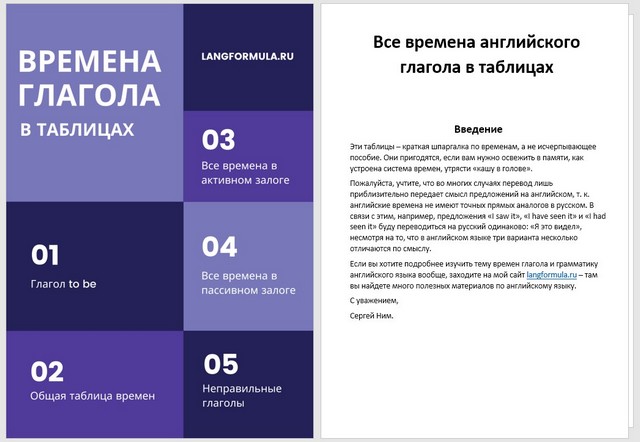
Этот справочник включает таблицы глагола to be, общие таблицы времен, таблицы по каждому времени в отдельности, включая пассивный залог, а также подборку неправильных глаголов
Упражнение 2. Неправильные глаголы
Неправильные глаголы отличаются тем, что образуют 2-ую и 3-ю формы нестандартным способом. Раскройте скобки и поставьте глагол во 2-ую или 3-ю форму. Какая именно форма нужна в каком предложении — понятно из контекста. Обращайте внимание на подсказки в виде глагола to have. Напомню: третья форма глагола используется (в том числе) в Present Perfect, например: «have seen», «has not forgiven» и т. д.
Упражнение 3. Времена Continuous
В этом задании вам нужно раскрыть скобки и поставить глаголы в нужную видовременую форму: Present Continuous, Past Continuous или Future Continuous. Обращайте внимание на перевод, чтобы понять, какое выбрать время.
Упражнение 4. Present Simple или Present Continuous?
В английском языке существуют отдельные формы для неопределенного (простого) времени и длительного. Раскройте скобки и поставьте глагол в нужную форму — Present Simple или Present Continuous.
Упражнение 5. Времена Simple или Continuous?
Это упражнение на все времена Simple и Continous. Раскройте скобки и поставьте глагол в одну из форм:
1. You will be safe now. — Теперь вы будете в безопасности.
2. Yesterday I found a coin in the garden. It looked very old. — Вчера я нашел монету в саду. Она выглядела очень старой.
3. Jake was watching TV when someone knocked on the door. — Джейк смотрел телевизор, когда кто-то постучал в дверь.
4. Life is like a box of chocolates. You never know what you are going to get. — Жизнь — как коробка шоколадных конфет. Никогда не знаешь, что получишь.
5. We were just talking about you! — Мы только что о тебе говорили!
6. I can’t pick you up from the school today, because I will be working in the evening. Mom will pick you up. — Я не могу заехать за тобой в школу сегодня, потому что вечером буду на работе. Мама за тобой заедет.
Упражнение 6. Past Simple или Present Perfect?
Present Pefrect и Past Simple часто вызывают затруднения, поскольку во многих случаях переводятся на русский язык одинаково. Проверьте, знаете ли вы, в каких случаях используется Past Simple, а в каких Present Perfect.
Выберите правильный вариант перевода.
Упражнение 7. Времена Past Perfect и Future Perfect
Past Perfect чаще встречается в художественной литературе, чем в разговорной речи. Future Perfect используется редко и в устной речи, и в письменной. Знаете ли вы, в каких случаях используются эти времена?
Упражнение 8. Времена в английском языке
В этом задании вам нужно раскрыть скобки и поставить глагол в видовременную форму, подходящую по смыслу. Обращайте внимание на перевод, чтобы понять, какое время глагола лучше подходит.